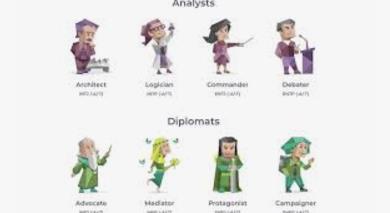
In modern society, MBTI (Myers-Briggs Type Indicator) has evolved from a psychological assessment tool into an indispensable “language” for social interaction among the younger generation. Whether in face-to-face communication or on social media platforms, MBTI has become a tool for quickly building connections, understanding others, and even expressing one’s own identity. This phenomenon is not accidental; it is the result of multiple psychological needs, social and cultural backgrounds, and media environments working together. This article will analyze how MBTI has become social currency, exploring the phenomenon from the perspectives of social psychology, cultural observation, and real-world cases.
The Basics of MBTI and Its Social Potential
The theoretical foundation of MBTI originates from Carl Jung’s psychological type theory and was further developed during World War II by Katharine Briggs and Isabel Myers to help individuals understand themselves and others. MBTI divides personality into four dimensions, each with two options: Introversion (I) vs. Extraversion (E), Sensing (S) vs. Intuition (N), Thinking (T) vs. Feeling (F), and Judging (J) vs. Perceiving (P). This produces 16 personality types, such as INFJ and ENTP, each representing a particular way of thinking and behaving.
However, MBTI’s penetration into youth social life is not due to its scientific precision but rather its symbolic power and ease of use. Compared with traditional information such as occupation or education, MBTI offers a simple, standardized, and fun personal label that can quickly guide social conversations. Through MBTI, people can form an initial understanding of strangers within seconds, providing a powerful psychological shortcut in today’s social environment.
Social Psychology: Ice-Breaking and a Sense of Security
In social psychology, ice-breaking is an action that reduces anxiety and builds trust. Humans often feel uncertainty and nervousness in unfamiliar environments, which increases the cost of social interaction. MBTI provides a low-risk, high-fun topic that can quickly establish communication without involving sensitive personal privacy. For example, if someone introduces themselves as “I’m an INFP,” the other person can easily respond with, “Oh, I’m an ENTJ. We might have very different personalities, but working together could be interesting,” thus lowering social defenses and providing a sense of psychological security.
Moreover, the structured nature of MBTI makes it easy to extend conversations. Each personality dimension can be translated into everyday examples: introverted individuals may prefer solitude or small gatherings, while extroverted people enjoy lively activities; sensing types focus on practical details, while intuitive types focus on possibilities; thinking types make rational decisions, while feeling types prioritize relationships; judging types prefer planned and orderly approaches, while perceiving types enjoy flexibility. These traits are easy to understand and provide endless conversation material in social interaction.
MBTI as a Tool for Self-Expression and Identity
In the digital age, young people highly value self-expression. Social media, short videos, and online forums allow everyone to continuously present themselves. MBTI, as a highly displayable symbol, can convey personality and values simultaneously. When someone labels themselves as an ENFP in their profile, potential viewers immediately gain a preliminary understanding of their character without lengthy explanations.
This symbolic expression also satisfies the psychological need of the younger generation to feel seen and understood. In life, individuals often experience identity ambiguity or role stress, and MBTI provides a simplified self-narrative framework, allowing people to summarize their position in the world in a single sentence. Even if this summary is not completely accurate, it provides psychological stability and a sense of belonging.
Community and Cultural Phenomena: MBTI’s Cross-Border Connectivity
MBTI’s function as social currency is closely related to the contemporary cultural need for group identification. In the past, social circles were determined by geography, schools, or workplaces, but today, personality types have become a cross-boundary connection symbol. People with the same personality type easily form a sense of recognition and quickly establish a context of mutual understanding. This cross-boundary social homogeneity has become a notable feature of online communities.
Online, there is an abundance of MBTI memes, interactive games, posts, and videos. Examples include “If you are an INFP, how would you handle this situation?” or “ENTJ behavior explained.” These discussions not only energize communities but also encourage user participation, forming a social culture based on personality. Through these interactions, young people entertain themselves, explore their identity, and develop meaningful connections with like-minded peers.
Real-World Case Studies
On platforms such as TikTok and Instagram, MBTI-related topics frequently top trending charts. For instance, on TikTok, videos under the #MBTI hashtag have accumulated billions of views, covering personality analysis, daily life, relationship advice, workplace interaction, and more. Discussion forums like Reddit, Douban, and PTT see tens of thousands of comments on MBTI posts every month, creating active and stable communities. These data indicate that MBTI is not only a psychological tool but also a form of social capital.
Moreover, many organizations have begun using MBTI for team building and workplace training. Studies show that when employees understand each other’s personality types, communication efficiency and collaboration quality generally improve. This practical application further demonstrates that MBTI has real-life utility beyond entertainment or internet culture.
Advantages and Risks of MBTI
MBTI offers unique advantages as social currency: it quickly initiates interaction, lowers psychological costs, provides a self-expression tool, and fosters community connection. However, it also carries potential risks. Over-reliance on personality types can reinforce stereotypes and obscure individual diversity. Additionally, some online discussions may oversimplify personality traits, causing misunderstandings. Users should maintain cognitive flexibility and view MBTI as a reference tool rather than an absolute label.
Psychologists suggest that MBTI is best used as an aid for self-understanding and social interaction, providing conversation topics and guidance rather than serving as the sole basis for evaluating others. This approach allows individuals to enjoy the social benefits MBTI offers while avoiding the limitations of rigid categorization.
MBTI and Contemporary Social Characteristics
The socialization of MBTI reflects several key features of contemporary society:
- Information Overload and Cognitive Simplification: In an era of fragmented information, people need quick ways to understand the world, and MBTI provides a simplified framework.
- Fluid Identities and Self-Narratives: Individuals today have diverse and dynamic identities, and MBTI serves as a tool for self-positioning.
- Digital Socialization and Cross-Border Connectivity: Social circles are no longer constrained by physical boundaries, and MBTI has become a universal language across platforms and cultures.
- Entertainment-Oriented Interest in Psychology: Young people are interested in psychological symbols but prefer interactive and entertaining formats, which MBTI meets.
These factors together have elevated MBTI to the status of social currency, making it more than just a psychological test—it has become part of cultural and social interaction.
Conclusion: The Social Value and Future of MBTI
In summary, MBTI’s status as social currency among young people results from the interplay of psychological needs, social functionality, cultural trends, and media environments. It serves as an ice-breaking tool, a self-narrative language, and a psychological shortcut that reduces social costs. Understanding this helps people use MBTI more rationally, enjoying its social convenience while avoiding the limitations of simplified labels.
Looking ahead, MBTI still holds potential in community culture, digital interaction, and psychological support. As research and applications continue, this tool may further integrate into education, workplaces, mental health, and cross-cultural communication, becoming an essential component of social symbols and self-awareness tools for the new generation.