Creativity is a strange and fascinating force. It can strike when you least expect it: someone invents an automatic folding pizza machine, another person uses VR technology to cure acrophobia, and yet another integrates AI into a social platform for pets. At first glance, these ideas might seem absurd, but from the perspective of MBTI, every quirky invention carries the imprint of personality type.
As an MBTI enthusiast, I love observing life and celebrities to try to decode their brain-bending behaviors. I’ve found that creativity isn’t just inspiration—it’s a concrete reflection of thinking patterns, cognitive styles, and personality traits. Today, we’ll take a deep dive into which MBTI types are most likely to generate quirky creativity and how their inventive styles manifest in real-life American celebrities.
The Science of Creativity: Why Some People Have Naturally Wild Ideas
Psychologists generally define creativity as the ability to generate ideas that are novel, useful, and valuable. In other words, creativity isn’t just about being imaginative—it has to be practical too. Research shows that creativity relies on three core elements:
- Divergent Thinking – the ability to look at problems from multiple perspectives and generate many possibilities.
- Implementation Ability – the capability to turn ideas into reality, including planning, resource integration, and execution.
- Intrinsic Motivation – the inner drive that determines whether creative ideas will be pursued over time.
MBTI provides an excellent framework for understanding individual differences in creativity. The four dimensions (E/I, S/N, T/F, J/P) affect not only how we perceive the world but also how we generate, filter, and implement ideas:
- N/S (Intuition vs. Sensing): Intuitive types (N) excel at pattern recognition, concept association, and future-oriented thinking, while sensing types (S) focus on concrete details and practical feasibility.
- E/I (Extraversion vs. Introversion): Extraverts (E) draw inspiration from social interaction, whereas introverts (I) develop unique concepts in solitude.
- T/F (Thinking vs. Feeling): Thinking types (T) emphasize logic and structured innovation, while feeling types (F) lean toward experiential and emotionally resonant ideas.
- J/P (Judging vs. Perceiving): Judging types (J) prefer systematic execution of ideas, while perceiving types (P) are flexible and spontaneous, often producing non-linear, unexpected insights.
With this framework, we can analyze each MBTI type’s quirky creativity and illustrate it with real-life examples.
INFP / ENFP: The Dreamers and Idea Mavericks
If there’s one group of MBTI types that dominates the realm of whimsical, highly imaginative ideas, it’s INFPs and ENFPs. They are emotionally rich and mentally agile, often connecting seemingly unrelated concepts in surprising ways.
Cognitive Mechanism
INFPs and ENFPs draw creativity from a vivid inner world and value sensitivity. They often construct elaborate imaginative systems and link them to emotional experiences. This high degree of divergent thinking allows them to leap across concepts, blending elements that others might never combine.
- INFP: Prefers introspection; ideas are often personal, idealistic, and emotionally driven.
- ENFP: Extraverted and socially engaged; ideas evolve through interaction and sharing.
American Celebrity Examples
Walt Disney (INFP/ENFP)
Disney epitomizes whimsical creativity. He not only created iconic characters like Mickey and Donald but also conceived the idea of theme parks—a physical realization of fantasy. His approach is typical of INFPs: imagining a perfect world first, then assessing its value through emotional resonance rather than mere practicality.
Robin Williams (ENFP)
Williams’ improvisational genius showcases ENFP creativity. On stage, he transformed absurd concepts into interactive experiences, constantly iterating through audience engagement. For ENFPs, creativity isn’t static—it thrives in social interaction.
Quirky Creative Examples
- Inventing mood-regulating perfumes that trigger memories through scent.
- Building alien-themed cafés, both as stories and real-life experiences.
- Designing social apps that blend narrative and user interaction.
INTJ / ENTJ: The Strategic Visionaries

If INFPs/ENFPs are the romantic dreamers of quirky creativity, INTJs and ENTJs are the rational, strategic innovators. Their ideas may seem outrageous at first glance, but each is backed by meticulous planning and logical foresight.
Cognitive Mechanism
INTJs and ENTJs generate creativity through systematic thinking and abstract pattern recognition. They examine problems from a macro perspective and propose forward-looking solutions:
- INTJ: Blueprint-oriented; ideas are high-level and conceptually rigorous.
- ENTJ: Action-driven; ideas are implemented strategically and pragmatically.
American Celebrity Examples
Elon Musk (INTJ)
Musk’s eccentric innovations span electric cars (Tesla), Mars colonization (SpaceX), and brain-machine interfaces (Neuralink). At first glance, his ideas seem outrageous, but each stems from identifying fundamental problems and logically validating potential solutions. This is quintessential INTJ strategic creativity.
Sheryl Sandberg (ENTJ)
As Facebook COO, Sandberg created initiatives like Lean In, encouraging women to assert themselves professionally. This represents a social-strategy form of quirky creativity, translating abstract principles into actionable, systemic solutions.
Quirky Creative Examples
- Automated waste-sorting systems.
- Global satellite internet via Starlink.
- Subterranean high-speed tunnel networks (The Boring Company).
ISTP / ESTP: The Hands-On Experimenters
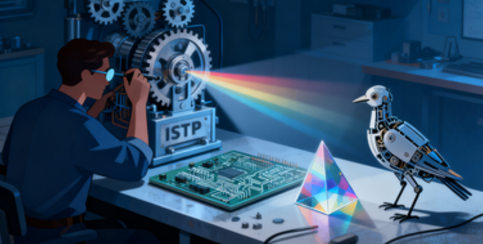
ISTPs and ESTPs are tactile, action-oriented types who thrive on experimenting with tools and technologies. Their creativity is highly practical, often quickly translated into tangible prototypes.
Cognitive Mechanism
- ISTP: Introverted, hands-on, tests ideas experimentally.
- ESTP: Extraverted, adventurous, iterates ideas quickly through trial and error.
American Celebrity Examples
Steve Wozniak (ISTP)
Wozniak co-created the Apple I, rapidly prototyping and iterating—a perfect example of hands-on creativity that turns ideas into real products.
Jeff Bezos (ESTP)
Bezos’ early Amazon warehouse automation experiments show ESTP traits: hands-on innovation combined with rapid testing and feedback-based iteration.
Quirky Creative Examples
- DIY home automation robots.
- Converting skateboards into electric motorcycles.
- Customizable, interactive home systems.
ESFP / ISFP: The Sensory Artists
These types excel at transforming ordinary experiences into extraordinary sensory or artistic expressions.
Cognitive Mechanism
- Highly sensitive to color, sound, touch, and visual elements.
- Creativity emphasizes experiential and interactive qualities.
American Celebrity Examples
Lady Gaga (ISFP/ESFP)
Gaga’s performances, costumes, and music videos are full of quirky creativity. Her ideas seamlessly extend from concept to sensory impact, creating immersive experiences that deeply resonate with audiences.
Pharrell Williams (ESFP)
Combines music, visual arts, and interactive exhibitions, demonstrating the typical sensory-artistic creativity of ESFPs.
Quirky Creative Examples
- Transforming everyday objects into artistic props.
- Creating immersive VR music experiences.
- Designing interactive food or installation art.
ENFJ / INFJ: The Social Innovators
ENFJs and INFJs focus on social impact, creating innovations that improve human experiences and relationships.
Cognitive Mechanism
- Highly empathetic and system-oriented.
- Creativity often addresses societal needs and organizational structures.
American Celebrity Examples
Oprah Winfrey (INFJ)
Oprah’s media empire—from talk shows to book clubs to philanthropic initiatives—reflects social innovation. Her creativity isn’t just in content but in designing a system that maximizes societal impact.
Barack Obama (ENFJ)
Through social media and organizational strategies, Obama innovated in voter engagement and civic participation—showing how ENFJs excel at socially impactful creative initiatives.
Quirky Creative Examples
- Community-building social projects.
- Apps or platforms enhancing human connection.
- Innovative educational or media initiatives.
Comparing MBTI Quirky Creativity Styles
| MBTI Type | Creativity Style | Key Traits | Execution Method |
|---|---|---|---|
| INFP / ENFP | Imaginative Dreamer | Emotion-driven, story-based | Introspection / Social Interaction |
| INTJ / ENTJ | Strategic Visionary | Logic-driven, systematic | Blueprinting / Resource Integration |
| ISTP / ESTP | Hands-On Experimenter | Practical, adventurous | Prototyping / Iteration |
| ESFP / ISFP | Sensory Artist | Sensory-rich, interactive | Performance / Immersive Experience |
| ENFJ / INFJ | Social Innovator | Empathy-driven, system-oriented | Organizational Strategy / Social Impact |
Misconceptions About Creativity
Many people assume:
- Imaginative types = born creative geniuses
- Practical types = boring or unimaginative
In reality, creativity is the interplay of personality, cognitive style, and environmental context. MBTI helps us understand our thinking patterns and leverage our strengths to generate quirky, impactful ideas.
Mini Test: What’s Your Quirky Creativity Style?
If you were asked to invent a futuristic snack, what would you do?
- INFP/ENFP: Create candy that changes flavor according to your mood.
- INTJ/ENTJ: Design a nutritionally complete, sustainable smart snack system.
- ISTP/ESTP: Build interactive, mechanically complex snack devices.
- ESFP/ISFP: Transform snacks into artistic, edible sculptures.
- ENFJ/INFJ: Organize community snack experiences that encourage interaction.
Such exercises help identify your quirky creativity style and show how personality type influences innovation.
Quirky Creativity is Everywhere
Whether you’re a dreamy visionary, a strategic planner, a hands-on experimenter, a sensory artist, or a social innovator, quirky creativity exists in every personality type. The next time you see someone inventing something seemingly ridiculous, think about the MBTI type behind it. And remember—your own quirky ideas might just be waiting in your afternoon coffee break or evening reflection, ready to emerge.
As I like to say: the next world-changing invention could be sparked by your own quiet, whimsical thought.